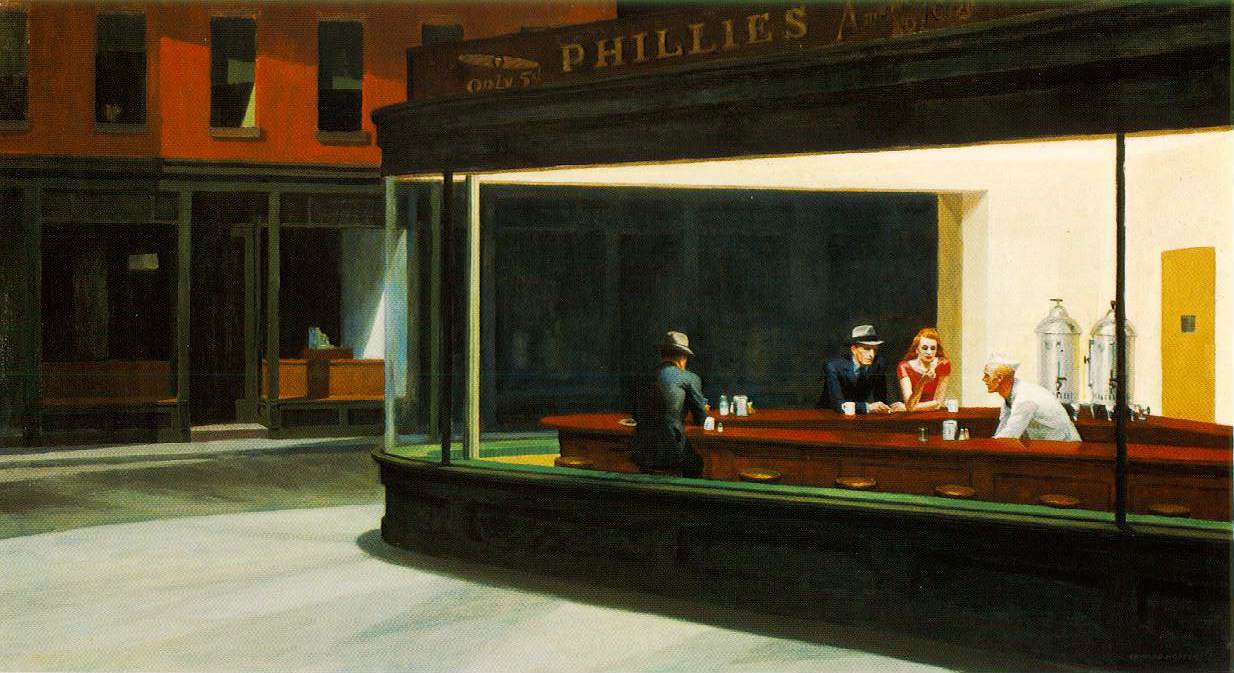
Der Fotograf Hunter Freeman hat eine hübsche Galerie mit Astronauten-Fotos auf seiner Seite. Leider nur sechs Fotos – aus der Idee hätte man deutlich mehr rausholen können.
(via Likecool)

"Fans old enough to remember the days before the Empire struck back in 1980 might recall a little-known promotion launched in the months preceding the first Star Wars sequel. As reported in the Spring 1980 issue of Bantha Tracks -- the original Star Wars Fan Club newsletter -- a telephone hotline was set up to allow callers to dial in and hear teasers for The Empire Strikes Back several months before the film's release. In the years since the Bantha Tracks story, fans savvy to the existence of the "Empire Hotline" have sought out recordings of the four messages described in the article, which were actually performed exclusively for the hotline by actors Mark Hamill (Luke Skywalker), Harrison Ford (Han Solo), Anthony Daniels (C-3PO), and James Earl Jones (voice of Darth Vader) ..." Rare 1980 "Empire Hotline" Recordings Discovered (inklusive fünf Audio-Tracks)(via Metafilter)
"A quick Apple ipad live fingerpainting demo that I streamed live from my Brooklyn studio on Monday June 21st. 2010, The model sat for 3 hours as I painted and answered questions on how I use the iPad and the Brushes app. Just thinking of creative uses for the ipad."(via Gizmodo)
"Russell Kirsch says he’s sorry. More than 50 years ago, Kirsch took a picture of his infant son and scanned it into a computer. It was the first digital image: a grainy, black-and-white baby picture that literally changed the way we view the world [...] The square pixel became the norm, thanks in part to Kirsch, and the world got a little bit rougher around the edges ... "Wie ein überarbeitetes digitales Bild mit "variabel geformten" Pixeln aussieht, zeigt Russell Kirsch an Hand seines mittlerweile 53 jährigen Sohns:
Kirsch made that first digital image using an apparatus that transformed his picture into the binary language of computers, a regular grid of zeros and ones. A mere 176 by 176 pixels, that first image was built from roughly one one-thousandth the information in pictures captured with today’s digital cameras. Back then, the computer’s memory capacity limited the image’s size ...
Yet science is still grappling with the limits set by the square pixel. “Squares was the logical thing to do,” Kirsch says. “Of course, the logical thing was not the only possibility [...] but we used squares. It was something very foolish that everyone in the world has been suffering from ever since.”
Now retired and living in Portland, Ore., Kirsch recently set out to make amends. Inspired by the mosaic builders of antiquity who constructed scenes of stunning detail with bits of tile, Kirsch has written a program that turns the chunky, clunky squares of a digital image into a smoother picture made of variably shaped pixels ..." Science News: Circling the square

The Big Picture: G20 Protests in Toronto
"The x-ray, taken in 1954 at Cedars of Lebanon Hospital ... features Monroe's chest and lungs ..." Quelle: Daily NewsMan muss schon ein echter, ähm, Hardcore-Fan sein, um für drei Marilyn X-Rays zusammen 45.000 Dollar hinzublättern.
"The cat, named Oscar, was referred to Mr Fitzpatrick by his local vet in Jersey, following the accident last October. Oscar was struck by the combine harvester whilst dozing in the sun. The prosthetic pegs ... were developed by a team from University College London led by Professor Gordon Blunn ... Professor Blunn and his team have worked in partnership with Mr Fitzpatrick to develop these weight-bearing implants, combining engineering mechanics with biology. Mr Fitzpatrick explained: "The real revolution with Oscar is [that] we have put a piece of metal and a flange into which skin grows into an extremely tight bone ... We have managed to get the bone and skin to grow into the implant and we have developed an 'exoprosthesis' that allows this implant to work as a see-saw on the bottom of an animal's limbs to give him effectively normal gait." BBC News: Bionic feet for amputee cat
"The players both count to five (three), though it is obviously better to repeat the name of the game (Monkey! Robot! Pirate! Ninja! Zombie!). Each time you raise your fist and swing it down. On the fifth (third) count, you form your hand into one of the five gestures. (It is recommended that in addition to the hand gesture, you also add an aural component to this — see below for suggested noises.) So, what beats what, and what are the gestures ..." How to Play Monkey-Pirate-Robot-Ninja-Zombie(via Boing Boing)

"You will be able to visit the one of most top secret objects of the USSR. You will be able even to sit in the Command seat where a simple push of a button could have ended civilization as we know it during the Cold War. It sounds dramatic but you can’t help but think of this kind of stuff when you visit this place." QuelleEnglish Russia hat Fotos zusammengestellt, von denen ich glaube, dass sie nicht nur für diejenigen, die wie ich mit NATO-Doppelbeschluss und irrwitzigem Wettrüsten in den 80ern aufgewachsen sind, interessant sein könnten:
English Russia: Strategic Missile Forces Museum - Intercontinental Wars

The Bridge A Hoover Dam: Teil 1 / 2 / 3(via Look At This)
English Russia: Subterranean River (28 Fotos)
city/cities: Galerie 1 und Galerie 2(via fubiz)
"With a successful distribution of the pilot [Josh Bernhard and Bracey Smith] are hunting for the donors and sponsors that will make the continuation of the show possible. The show's pilot was shot for just $6000, raised through the micro-funding platform Kickstarter. "This production was possible due in no small part to the willingness of talented, professional people working for free," explains Bernhard. "From actors to composers, they did this because they believed in the project and wanted to see it happen.The production was a journey in and of itself ..." Pioneer OneMaking of und Behind the Scenes gibt es auf dem Vimeo-Channel der Serie. Ob so die Zukunft des Fernsehens aussieht sei mal dahingestellt – auf alle Fälle hört sich das für mich alles sehr sympathisch an und ich hoffe deshalb sehr, dass mir der Pilot gefällt ...
"Die Japanische Riesenkrabbe hat ein Gewicht zwischen 16 und 20 Kilogramm. Ihr Körper hat einen Durchmesser von rund 37 Zentimetern, von der Spitze eines Beins zum anderen misst sie in ausgestreckter Lage bis zu 3,7 Meter. Der Körper ist rundlich und mit stumpfen Auswüchsen bedeckt, die Beine sind extrem lang und dünn ..." Wikipedia: Japanische RiesenkrabbeAufgenommen wurde das in Echtzeit sechsstündige Spektakel im Enoshima Aquarium in Fujisawa (Japan).

"Astronomers at the University of Sheffield have managed to record for the first time the eerie musical harmonies produced by the magnetic field in the outer atmosphere of the sun. They found that huge magnetic loops that have been observed coiling away from the outer layer of the sun's atmosphere, known as coronal loops, vibrate like strings on a musical instrument. In other cases they behave more like soundwaves as they travel through a wind instrument. Using satellite images of these loops, which can be over 60,000 miles long, the scientists were able to recreate the sound by turning the visible vibrations into noises and speeding up the frequency so it is audible to the human ear ..." Music of the sun recorded by scientists
"The following mini comic book was part of a promotional collaboration between Walt Disney and General Mills. It features Mickey and Goofy, two distinct psychoactive drugs, surreptitious dosing, a bad shaman, and a "talking" elephant [...] It is one of several psychoactive drug-related uses of Disney characters that in retrospect appear naive and inappropriate. This commercial, drug-positive use of characters designed for children raises a number of issues of historical interest. The ethnocentric cultural references, including the representation of Africans and the superiority of American medications, stand out even against the odd amphetamines-are-good-for-you backdrop. It is notable that Mickey Mouse gives powerful drugs to two other characters without their knowledge or consent ..." Mickey Mouse on Speed (dort kann man die komplette Geschichte lesen)(via electru)
"What would you do if you could travel back in time? [...] here's what I'd do after that: grab all the modern technology I could find, take it to the late 70's, superficially redesign it all to blend in, start a consumer electronics company to unleash it upon the world, then sit back as I rake in billions, trillions, or even millions of dollars." ALT/1977: WE ARE NOT TIME TRAVELERS(via Twitter)
"Pictured here at the Baby Swim Series class in West London, these cute and sometimes hilarious images show you're never too young to learn. Phil Shaw and his partner Ana Torres set up London Baby Swim in 2008, offering classes for parents and babies as young as six weeks old to take to the water and develop their skills" Swimming babies: underwater photographs of babies learning how to swim(via Metafilter)
"My video to an amazing song from Lollywood, Pakistan's answer to Hollywood and Bollywood. What a truly great track with its combination of moog synths, sixties guitar and a Lollywood pop beat set to what is really quite a wonderful tune when all is said and done, about love, peace and getting along with each other." LinkUnd jetzt alle zusammen:
Whats Today What Will Be Tomorrow Dont think(via Boing Boing)
Sing with me tie/die with me humanityly
Dama Dam Mast Qalandar
Sakhi Shahbaz Qalandar
This is the Song of Wonder
Sound of Wonder
Song of Wonder

"Fix an atomic rocket engine? Clean up spills of radioactivity? Rescue H-bomb victims? That's what the Beetle is for ..." Google Books: Artikel in einer Popular Science-Ausgabevon 1962(via Atompunk)
"My work investigates the slippery intersection between the digital world and reality. Specifically, I am interested in how we experience nature through technology. When we see images of nature on TV or on a computer screen, we feel that we are seeing nature but we are really only seeing patterns of pixilated light. For the past few years, I have been creating a series of “Re-things.” These whimsical sculptures represent pixilated animals and objects of nature. I find images of my subjects online and then create three-dimensional sculptural representations of these two-dimensional images. I build my “Re-things” pixel by pixel to understand how each pixel plays a crucial role in the identity of an object ... In my building process, I start with a full sheet of material like plywood or MDF and cut it into ½” strips of varying lengths--typically ½” to 2’ long. I then hand dye each strip of wood individually with dyes mixed from ink and acrylic paint. I mix each color by hand to create a huge palette of colors in order to give the sculpture more depth and visual interest before assembling the object. My conceptual and material practice explores identity, color, labor, technology, and science ..." Aus dem About zitiert / Fotos diverser Pixelskulpturen / Fotoserie mit Pixelgeiern(via fubiz)
"Obwohl Alexander Shulgin der allgemeinen Öffentlichkeit sicher kein Begriff ist, ist er zweifellos der wichtigste psychedelische Chemiker aller Zeiten. Diejenigen, die ihn kennen, sind zudem oft nur mit seiner Rolle bei der Wiederentdeckung und Popularisierung von MDMA vertraut. Aber MDMA ist nur eine von über 100 einzigartigen chemischen Substanzen, die Shulgins pharmakologisches Lebenswerk ausmachen, das sich so weit ins Unbekannte hinein erstreckt, dass er oft selbst neue Begriffe entwickeln musste, um die Effekte seiner Substanzen zu beschreiben („Augentoben“ ist eins meiner Lieblingswörter). Unter den Drogen sind selektive auditorische oder taktile Halluzinogene, Psychedelika, die die Zeit ausdehnen, oder den Nutzer in einen Zustand amnestischer Verwirrung versetzen, Antidepressiva, Aphrodisiaka, Stimulanzien, Empathogene, Entactogene, Neurotoxine und mindestens ein hochprofitables Insektizid. Dazu kommen ein paar der wichtigsten medizinischen Substanzen, die es überhaupt gibt. Und obwohl nur ein Bruchteil von ihnen offiziell untersucht worden ist, sind sie die besten Werkzeuge, die wir haben, um den menschlichen Geist zu verstehen ..." Das Letzte Interview mit Alexander Shulgin
"The show's initial pilot, developed for the 2006–07 television season, was substantially different from its current form. Only Johnny Galecki and Jim Parsons were in the cast, and the female lead, Katie, was envisioned as "a street-hardened, tough-as-nails woman with a vulnerable interior". Katie was played by actress Amanda Walsh. They also had a female friend called Gilda (played by Iris Bahr). The show's original theme music was also different, using Thomas Dolby's hit "She Blinded Me With Science". The show was not picked up, but the creators were given an opportunity to revise the show, bringing in the remaining leading cast and retooling the show to its current format. The original unaired pilot has never been released on any official format, but copies of it are floating around the internet with various collectors ..."Videos nach dem Klick – am besten gleich runterladen, man weiss ja nie ...

"Cut & Paste is a ten-minute documentary exploring the process of zine-making both directly through the filmmakers personal experiences of making a zine and then releasing it into the wild, and via the voices and work of other Boston zinesters. The result reveals intimately how and why these independent publications are made."Als jemand, der mit der Heftchenkultur der Prä-Internetzeit aufgewachsen ist, behaupte ich einfach mal: Bloggen ist gar nicht so übel – wer trotzdem lieber ein Totholzmedium auf die Beine stellen möchte: Instructubles erklärt die Basics in einem Guide To Zine Making – wo ich auch die Doku gefunden habe.
"Ein kurzer Test mit dem Stimmgerät vor dem Fernseher zeigt, dass es sich bei dem nervenden Dauerton um ein Ais handelt ... und dieser Ton hat als kleines Ais, das ist der Grundton der Vuvuzela, eine Frequenz von etzwa 233 Hertz. Obertöne liegen demzufolge beim eingestrichenen Ais (466 Hertz), dann bei 932 Hertz und 1864 Hertz. Für den Vuvuzela-Killer brauchen wir also nur einen steilflankigen Bandstoppfilter, der die entspechenden Frequenzen herausnimmt. Hierzu eignet sich im Prinzip jeder moderne Computer, der über eine Soundkarte mit geringen Latenzzeiten verfügt und entsprechende Software ..." Soundpoeten: Vuvuzela-FilterMein neuer Lieblingsbegriff ist übrigens "steilflankiger Bandstoppfilter" – klingt ein bisschen wie die Rollenbeschreibung eines modernen Außenverteidigers oder defensiven Mittelfeldspielers im Fußball.
"The USBTypewriter™ is a new and groundbreaking innovation in the field of obsolescence. Lovers of the look, feel, and quality of old fashioned manual typewriters can now use them as keyboards for any USB-capable computer, such as a PC, Mac, or even iPad! The modification is easy to install, it involves no messy wiring, and does not change the outward appearance of the typewriter [...] you can buy buy a USB Typewriter of your very own, or you can buy a kit to make one yourself. You can also send me your typewriter to customize. " Jack Zyklin: The USBTypewriter™ / Sein Shop bei Etsy(via Technabob)


"Die so genannte Utah-Teekanne (englisch: Utah teapot) gehört zu den ältesten und bekanntesten 3D-Modellen der Computergrafik. Es handelt sich um ein einfaches Oberflächenmodell einer Teekanne, bei der der Innenhohlraum nicht einsehbar ist. Martin Newell entwickelte sie 1975 im Rahmen seiner computergrafischen Forschungsarbeit an der Universität von Utah. Newell benötigte ein einfaches mathematisches Modell eines Gebrauchsgegenstandes für seine Arbeit, und die Melitta-Teekanne seiner Frau schien geeignet: Die Form hat einige für die damaligen Zwecke notwendigen Eigenschaften; sie ist rund, hat Sattelpunkte und konkave Elemente ... und sieht auch ohne aufwändige Oberflächentextur recht ansprechend aus. Nachdem Newell eine Beschreibung der Teekanne als Bézier-Fläche entwickelt hatte, übernahmen andere Forschungsgruppen das Modell für ihre Arbeit, so dass das Objekt zu einem Referenzmodell für Computergrafik wurde ..."Und wie man aus einer virtuellen Teekanne mit Hilfe eines 3D-Printer eine reale herstellt, erklärt dieses Interview.

"Having some time to fill in between the rehearsal and the performance, Oz looked in the closet of their dressing room and was startled to discover that it was filled with dark, dusty pipes. Since the Paar studio was not far from Henson's company headquarters in New York, Henson suggested that the crew go back to get some paints and fake fur with which to decorate the pipes. The group worked hard on decorating the pipes in as many silly and imaginative ways as possible. The pipes soon had monstrous eyes, goofy noses, and multi-colored faces. Henson later revealed that part of the brown fabric had come from the original Grover. The bottom was signed "With Love From the Muppets ..." Muppet Wiki: NBC PipesEin Video mit den NBC Pipes (ab ca. Minute 2:20), nach dem Klick:
"... it's worth recalling that high-tech (and relatively low-tech) gadgets for capturing and using solar energy are nothing new, and many of the ideas being batted around today are similar to equally ingenious notions floated and tinkered with for decades" LIFE: Solar Power Back in the DayMit Abstand am besten gefällt mir die Do Nothing Machine des Designers Charles Eames, der mir bislang nur durch seine Möbel vage ein Begriff war: Seine Maschine macht nämlich – wie der Name schon sagt – nichts. Außer in der Sonne rumzustehen und dabei beschäftigt zu tun. Video nach dem Klick.
"Before we were influenced by Mies van der Rohe or Frank Lloyd Wright, before we had seen the visual delights of Ronchamp, Pompidou Center and the Bauhaus school in Weimar, we were driven by a greater force of design inspiration. More primal and immediate than any of the previously mentioned examples, it was couch cushion architecture that established the basic building blocks of our design logic [...] Join us as we take a critical analysis of the architecture, methods and design philosophies of living room furniture re-appropriation." Couch Cushion Architecture; A Critical AnalysisUnd wer früher weder Haus noch Höhle gebaut hat, werfe ein Sofakissen in die Kommentare.
"The main theme of his work is investigating the intimate relationship between humans and technology. He is inspired by industrial design, architecture and urbanism" Branislav Kropilak: Depots(via today and tomorrow)
"In four years, a small company called Bigelow Aerospace is to launch a private space station that will be leased to governments, companies and perhaps space tourists. If its plans come to pass, its activities in space will dwarf those of the National Aeronautics and Space Administration and other governmental space agencies." The New York Times: An Inflatable Space Station (Slideshow)(via SCI FI Wire)
"I've seen a lot of movies over the years, and to prove I've sat through at least the first ten minutes of them I started making screenshots of the titles. Then my computer crashed and I almost lost them all. To save them for future generations I created this little website." Christian Annyas: The Movie Stills Collection(via io9)
"EYE, a three-story tall "incredibly lifelike" sculpture of an eyeball, will go on display in July in the city's Pritzker Park as part of a celebration of public art in the Loop, Chicago's business district. The three-dimensional installation, complete with a blue iris, was created by contemporary artist Tony Tasset ... Tasset chose an eye because it is a powerful symbol that has been used throughout history -- by the Egyptians, for example ... The steel reinforced fiberglass EYE has a blue iris because that is the color of Tasset's eyes. City officials hope it attracts lots of attention and visitors ... EYE will be on display from July 7 through October. Perhaps appropriately, it ends its run on Halloween." CNN: Will giant eye sculpture lure tourists?(via Boing Boing)

1. FROM APES TO ALIENS How HG Wells captured man's fascination with evolution to father a new form of fictionDen ersten Teil habe ich eingebunden, die restlichen verlinkt.
2. TROUBLE IN PARADISE Exploring the frightening future dystopias imagined by Orwell, Huxley and others
3. THE END OF THE WORLD AS WE KNOW IT The annihilation of humanity, as portrayed by British writers such as John Wyndham
"Two weeks ago, on May 16, Cruise Critic member Aquahound, who lives in Florida's Key West, found a camera washed up on the rocks in a local marina. The camera, which was in a waterproof housing of the type used by scuba divers, was undamaged. The latest image on its memory card was dated November 11, 2009, which implied that it had been separated from its owner for more than six months. Aquahound, a.k.a. Paul Shultz, just happens to be a criminal investigator for the U.S. Coast Guard and couldn't resist the challenge to identify the origins of the mysterious camera ..." Cruise Critic Member Found Aruba Couple's Camera...in Key West!(via Urlesque)


"Solar Equation is a three dimensional simulation of the sun [...] 100 million times smaller than the real thing [...] The solar animation on the balloon is generated by live mathematical equations that simulate the turbulence, flares and sunspots that can be seen on the surface of the Sun. This produces a constantly changing display that never repeats itself and gives viewers a glimpse of the majestic phenomena that are observable at the solar surface [...] Visitors can manipulate these animations in real time using a free application (only available onsite at present). domus: Solar Equation in MelbourneDas Ding schwebt noch bis zum 4. Juli über dem Fed Square in Melbourne. Könnte ich mir auch gut als Augmented Todesstern vorstellen.
"Die Science Fiction leidet einerseits an einem eklatanten Mangel an Zukunft und an Zukunftsgläubigkeit, andrerseits reflektiert auch sie spätestens mit dem Cyberpunk das vernetzte, nicht-lineare und posthistorische Weltbild des Millenium-Denkens. So hat sich ein merkwürdiges Retro-Phänomen gebildet: Die Rückkehr in eine Welt, in der die Zukunft noch möglich war. Der Lieblingsort dieses Rückzugs ist natürlich die Zeit, in der sich mit der Industrialisierung auch das Genre selbst herausbildete, die Zeit von Jules Verne bis H.G. Wells, die Zeit in der das Aufstieg und erste Krise des "positivistischen Bürgertums". Eine Zeitreise zurück in die Zukunft: Welche Art von Zukunft war 1880, 1910, 1940 ... 2000 vorzustellen, zu erhoffen oder zu fürchten? Und wie rekonstruieren sich in Seitenwegen der phantastischen Literatur, des Spiels und des phantastischen Films Zukunftsvorstellungen? Sind Parallelwelten und Möglichkeitserzählungen viel aktueller als Utopien und Dystopien? Und wie ist das Durcheinanderwirbeln der Zeiten als Story und Bild mit anderen Retro-Phänomenen in der Mode oder in der Pop-Musik verbunden?" Download-Link: We Were Promised Jetpacks - Vergangene Zukünfte (45:24 Minuten / 41,57 MB)Die nächsten Termine und Titel sind:
13.06.2010: Androiden lieben lernen - Die wundersame Welt des Universalgelehrten Alan N. ShapiroHier noch der Download-Link (46:10 Minuten / 42,28 MB) zur ersten Folge "Equilibrismus - Die Praxis der Utopisten"
20.06.2010: Burn After Eating. Kann uns vegetarische Ernährung noch retten?